A supplier contract renews itself for three more years because the notice window closed in March and nobody owned it. That is the failure contract management software exists to prevent. Signing is the easy part. The hard part is the record after signature: who owns it, what it obliges, and when it must be acted on.
We ranked 12 contract management software platforms on five weighted criteria: after-signature tracking (30), procurement fit (25), authoring and review (20), time to value (15) and pricing clarity (10). Facts come from vendor home, product, procurement, integration and pricing pages read on October 31, 2026. Our scoring rules are public, and more guides sit in the contract management hub.
What is the best contract management software in 2026?
Icertis is the best contract management software for most enterprise procurement teams in 2026, scoring 8.4 out of 10 for tracking obligations, renewals and supplier commitments after signature. Sirion (8.3) is close behind on obligation tracking, and Ironclad (8.2) suits teams that want the friendliest authoring and review.
| # | Platform | What it is | Best for | Score |
|---|---|---|---|---|
| 1 | Icertis | Enterprise contract intelligence platform | Large supplier portfolios, especially on SAP Ariba | 8.4 |
| 2 | Sirion | AI-native CLM with obligation tracking | Service contracts where performance must be measured | 8.3 |
| 3 | Ironclad | AI CLM with review and intake agents | Procurement teams reviewing a lot of vendor paper | 8.2 |
| 4 | Agiloft | No-code CLM with Astra AI | Teams that need custom workflows and many connectors | 8.0 |
| 5 | Docusign CLM | CLM tied to Docusign eSignature | Companies already standardized on Docusign | 7.9 |
| 6 | SAP Ariba Contracts | Contract module inside SAP Ariba | SAP Ariba customers who want one system | 7.8 |
| 7 | Conga CLM | CLM with Word and Google Docs authoring | Teams that negotiate in Word against a playbook | 7.8 |
| 8 | LinkSquares | CLM with a renewals and obligations view | Legal and procurement sharing one repository | 7.5 |
| 9 | Concord | Self-serve CLM with published plans | Mid-size teams that want a list price | 7.4 |
| 10 | Juro | Browser-native contract platform | Fast-moving teams with high contract volume | 7.3 |
| 11 | SpotDraft | CLM with a native Coupa workflow | Coupa customers starting contracts from requests | 7.2 |
| 12 | ContractWorks | Secure repository with alerts | Teams that mostly need storage and reminders | 7.0 |
Our pick
Icertis
Icertis has the deepest after-signature story for procurement. Its procurement page covers supplier obligations, milestones, renewals, service levels and commercial commitments. Its Vera Obligations module sends alerts to owners, and its SAP Ariba page links sourcing projects to the contracts they produce.
Which kind of contract management software do you need?
Most teams need one of three kinds: an enterprise CLM that governs every contract type (Icertis, Sirion, Ironclad, Agiloft, Docusign CLM, Conga), the contract module inside their source-to-pay suite (SAP Ariba Contracts), or a lighter platform built for speed and a clear price (LinkSquares, Concord, Juro, SpotDraft, ContractWorks). Our contract lifecycle management software guide explains how those shapes differ. For enterprise head-to-heads, see Icertis vs Ironclad vs Sirion and Agiloft vs Icertis vs Ironclad. For AI review depth, see our AI contract management software ranking.
Match the tool to the failure
| The failure you keep seeing | Lean toward | The question to ask |
|---|---|---|
| Auto-renewals slip past the notice date | Icertis, Conga, ContractWorks | Who gets the alert, and how far ahead |
| Suppliers miss SLAs and nobody notices | Sirion, Icertis | How an obligation links to the clause and the invoice |
| Legal is the bottleneck on vendor paper | Ironclad, Conga, Agiloft | What the AI flags and who approves the fallback |
| Contracts live outside your S2P suite | SAP Ariba Contracts, Icertis, SpotDraft | Which fields sync back to the suite |
| Nobody can find the signed copy | ContractWorks, LinkSquares, Juro | How old contracts get migrated and tagged |
| Budget needs a price before a demo | Concord, ContractWorks | What the next user or plan costs |
What the record holds
A contract record is only useful if each field has an owner and a source. Ask every vendor to show these fields on a real supplier agreement, in writing, before you sign.
| Field | Who owns it | Where it comes from |
|---|---|---|
| Counterparty and legal entity | Procurement | Supplier master in your ERP or S2P suite |
| Effective date, term and expiry | Contract owner | Extracted from the signed document |
| Renewal type and notice window | Contract owner | Extracted, then confirmed by a person |
| Pricing, rebates and price-increase terms | Category manager | Contract and pricing schedule |
| Service levels and penalties | Business owner of the service | Contract schedules |
| Obligations on both sides | Named obligation owner | Extracted clauses with a due date |
| Amendments and their effect | Legal | Linked amendment documents |
| Signature and audit trail | Legal operations | E-signature tool and CLM log |
How do the 12 platforms handle the record after signature?
Most of these platforms say they track renewals and obligations. Fewer name a source-to-pay connection, and only two publish a list price. The matrix shows what each vendor states on its own pages. A dashed circle means we did not find it, not that it is missing, so ask in the demo.
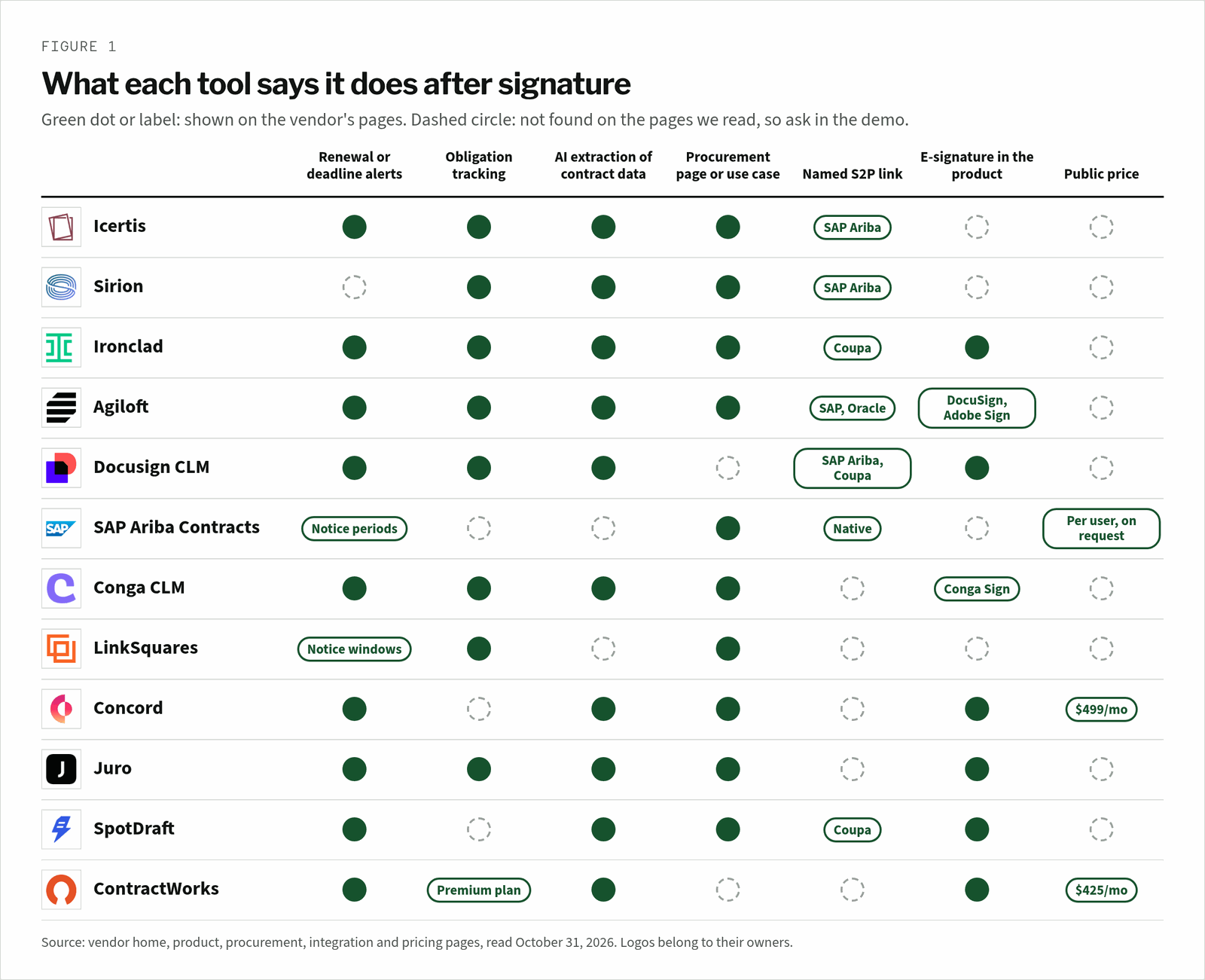
How we scored contract management software
After-signature tracking carries the most weight, because that is where value leaks. Procurement fit comes next: supplier paper, S2P and ERP links, and a procurement use case. Authoring and review, time to value and pricing clarity follow.
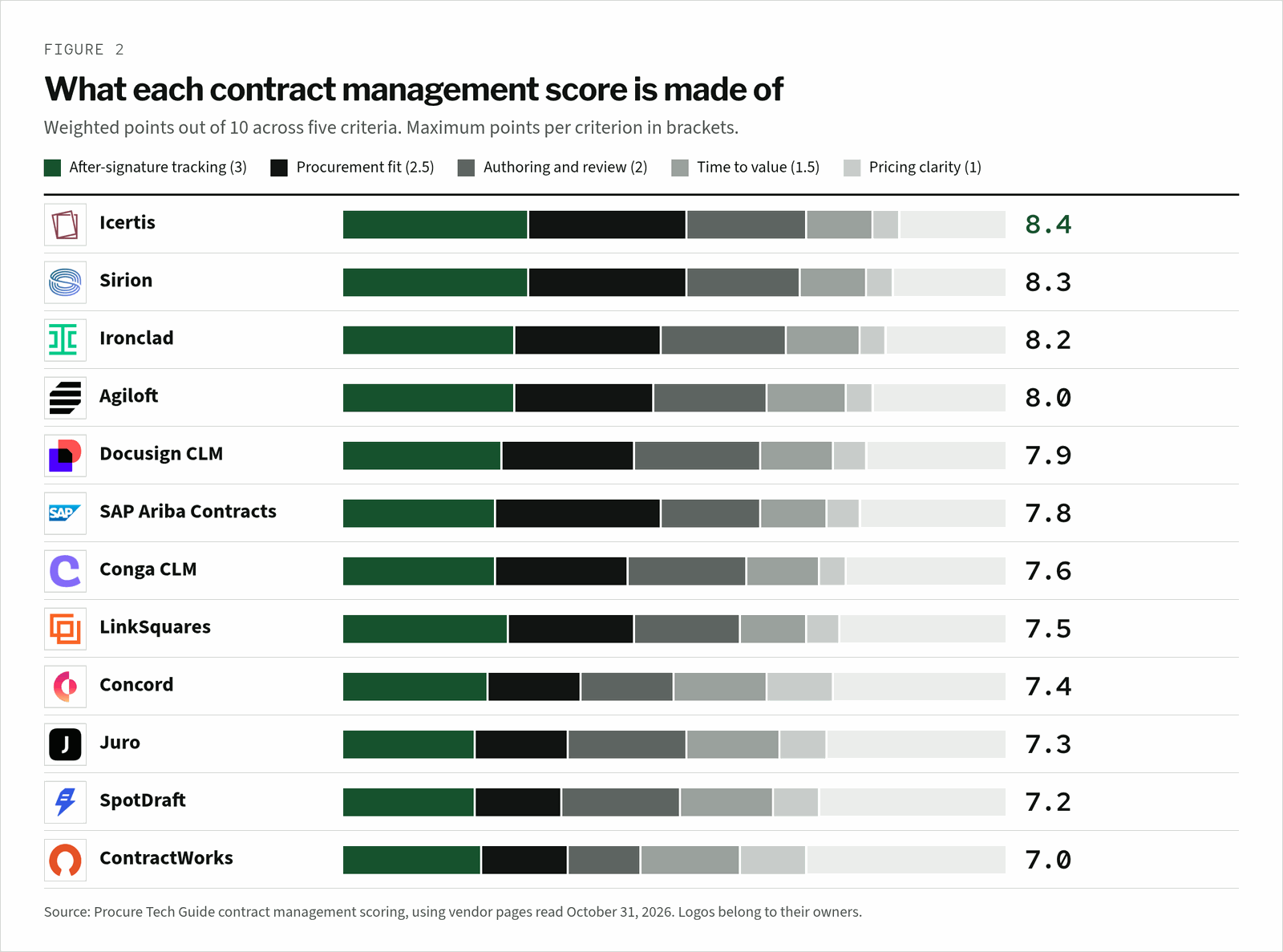
Icertis and Sirion tie on after-signature tracking. Icertis edges ahead on authoring. SAP Ariba Contracts scores highest on procurement fit because it lives inside the suite, but it trails on authoring and AI. Concord and ContractWorks score full marks on pricing clarity because their prices are public.
How much does contract management software cost?
Only Concord and ContractWorks publish a list price. Concord starts at $499 a month paid annually for 5 users, and ContractWorks starts at $425 a month billed annually. Every other platform here quotes on contract volume, users, modules or integrations.
| Platform | Published price or pricing basis | Source |
|---|---|---|
| Concord | Essentials $499/mo, Business $899/mo, Enterprise $1,299/mo, each paid annually with 5 users; extra users $49, $69 or $89 a month | Concord pricing |
| ContractWorks | Repository plan $425/mo billed annually, up to 50,000 documents, unlimited users and 10 eSignature licenses; Premium is custom | ContractWorks pricing |
| SAP Ariba Contracts | Priced per user per month, price on request, contract duration 3 to 36 months | SAP product page |
| Juro | Based on contract volume and integration complexity; all plans include unlimited users, workflows and templates | Juro pricing |
| SpotDraft | Based on contract volume; implementation and migration included at no extra fee | SpotDraft pricing |
| LinkSquares | Based on contract volume, users, modules, implementation and custom integrations | LinkSquares pricing |
| Ironclad | Shaped by products, users, workflows and growth; some integrations are add-ons | Ironclad pricing |
| Agiloft | Quote form for CLM (includes Astra) or Astra alone | Agiloft pricing |
| Icertis, Sirion, Docusign CLM, Conga CLM | Quote based; no price on the pages we read | Vendor sites |
Worked example
A team of 10 on Concord Essentials pays $499 for the first 5 users plus 5 × $49 for the rest, or $744 a month. Paid annually, that is $8,928 a year. Inputs: Concord list prices read October 31, 2026. Taxes and add-ons excluded.
The 12 best contract management software platforms, reviewed
1. Icertis
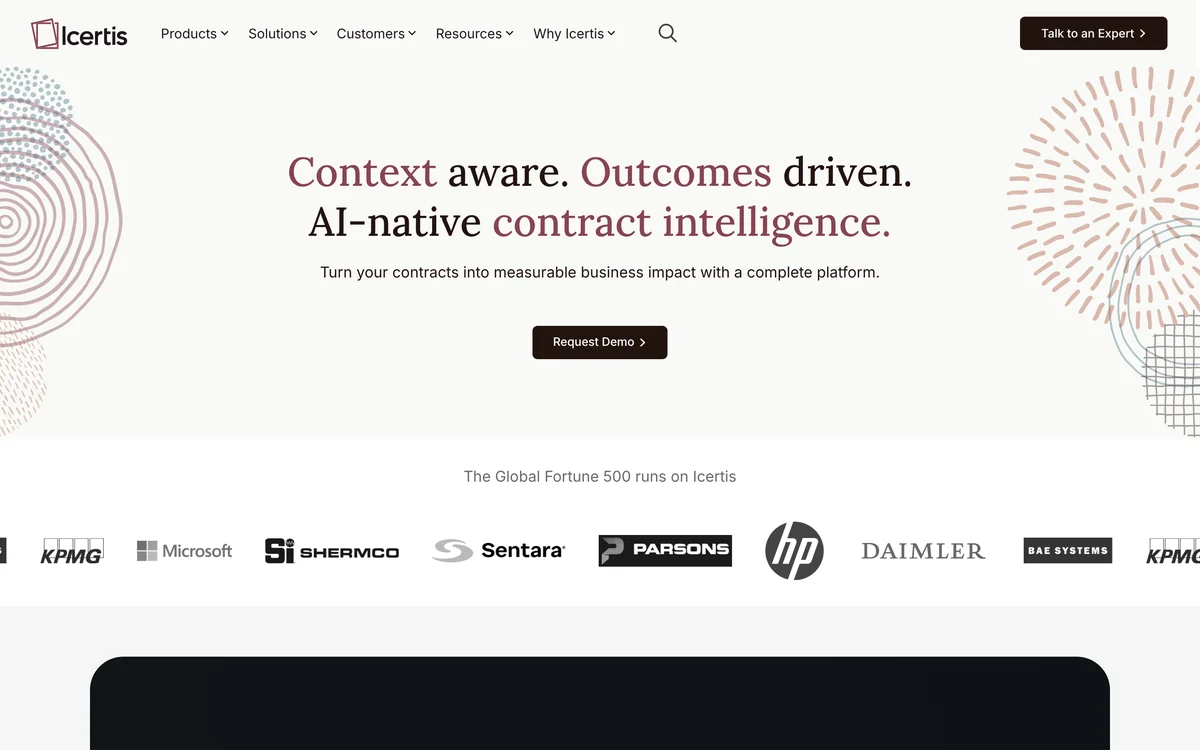
Icertis says on its home page that the Global Fortune 500 runs on Icertis. Its procurement page tracks commercial terms, obligations, renewals and compliance across every supplier agreement.
The Vera Obligations module extracts obligations and triggers alerts so owners act early and avoid penalties. Icertis also powers the contract intelligence inside SAP Ariba Contracts, and its SAP Ariba page links sourcing projects to contracts.
Strengths
- Deepest after-signature tracking for supplier contracts
- Alerts routed to obligation owners
- Native SAP Ariba connection
Watch-outs
- No public price
- Built for large programs, so smaller teams may find it heavy
2. Sirion
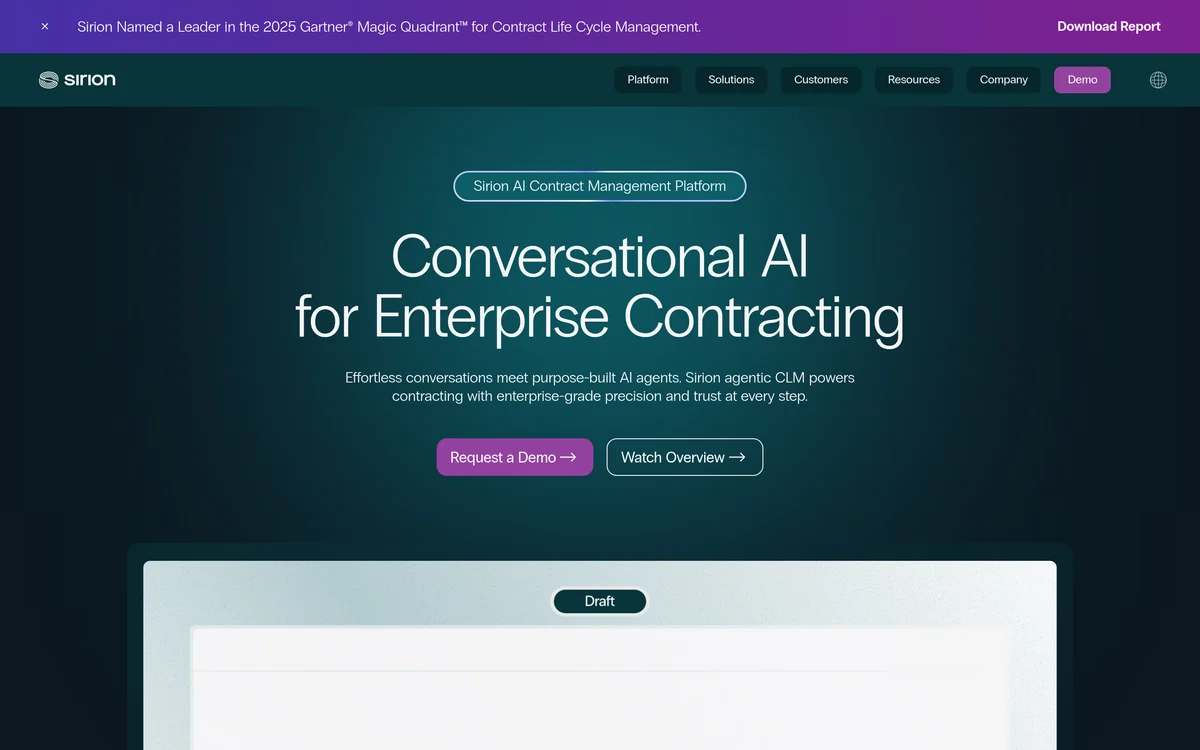
Sirion says it has customers across 70+ countries. Its Manage page tracks every obligation through its Single Extraction Agent and traces each one to the clause that holds it.
The same page says Sirion can identify payments and penalties tied to obligations and match each one to the right invoice line item. Its SAP Ariba integration page extends Ariba with Sirion CLM. We did not find renewal alerts named on the pages we read, so ask.
Strengths
- Obligation tracking traced to the clause
- Payments and penalties matched to invoices
- SAP Ariba integration
Watch-outs
- Renewal alerts not named on the pages we read
- No public price
3. Ironclad
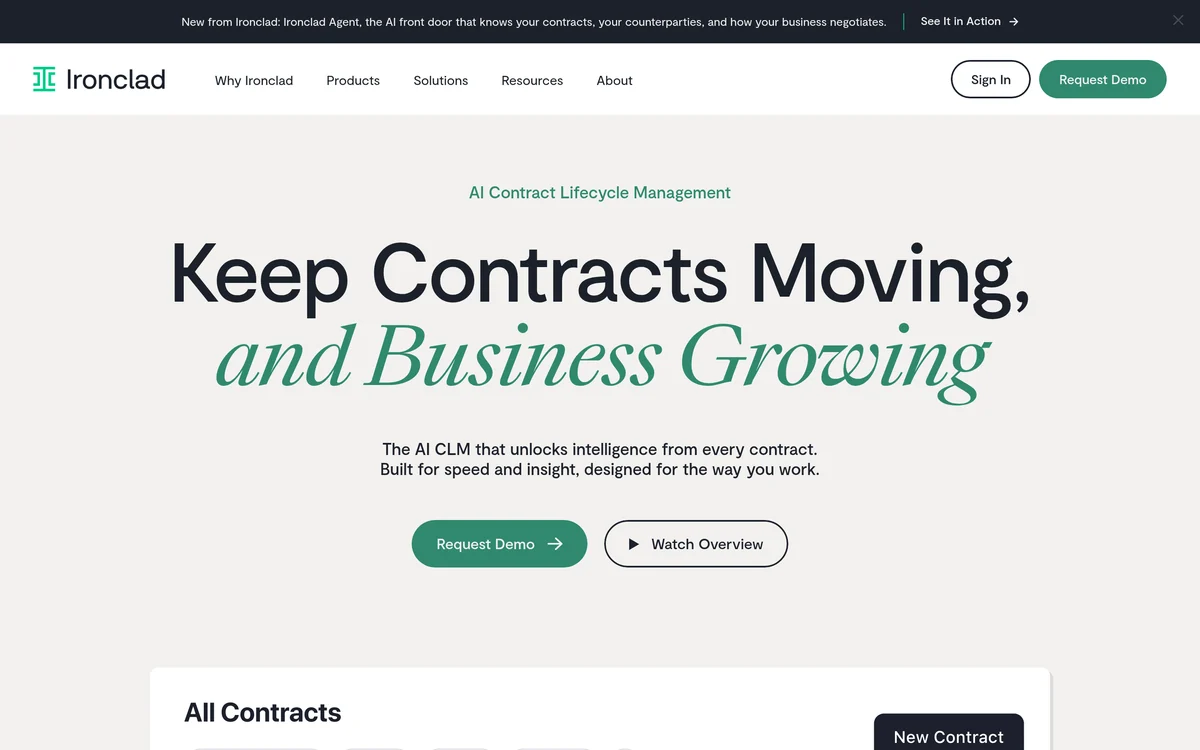
Ironclad says on its home page that it was named a Leader in the 2025 Gartner Magic Quadrant for CLM and in The Forrester Wave for CLM Platforms, Q1 2025.
Its procurement page turns renewals, discounts, rebates, credits, SLAs and termination rights into tracked value, with a prompt to act before renewal windows close. The Intake Agent reads vendor paper and fills the launch form. The pricing page names a Coupa integration.
Strengths
- AI review of vendor paper for pricing, renewal and termination terms
- Coupa integration
- Strong authoring for non-lawyers
Watch-outs
- Some integrations are paid add-ons
- No public price
4. Agiloft
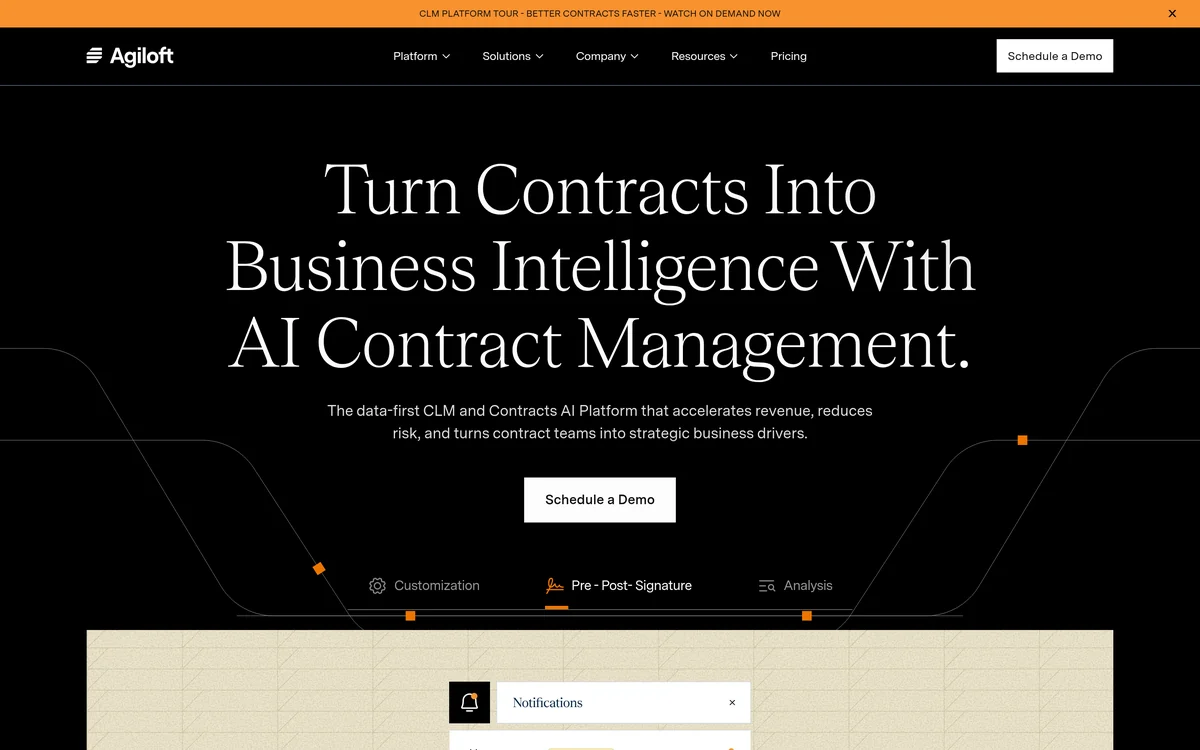
Agiloft’s home page says it works with Salesforce, SAP, Oracle and 1,000+ other systems, and is e-signature ready with DocuSign and Adobe Sign. Its Astra AI is aimed at legal and procurement teams.
The pricing page says Agiloft extracts obligations, automates follow-up and sends alerts for payments, expirations and deliverables. Pricing is a quote form for CLM, which includes Astra, or Astra on its own.
Strengths
- No-code workflow configuration
- SAP and Oracle connections
- Alerts for payments, expirations and deliverables
Watch-outs
- No public price
- Flexibility means more setup decisions
5. Docusign CLM
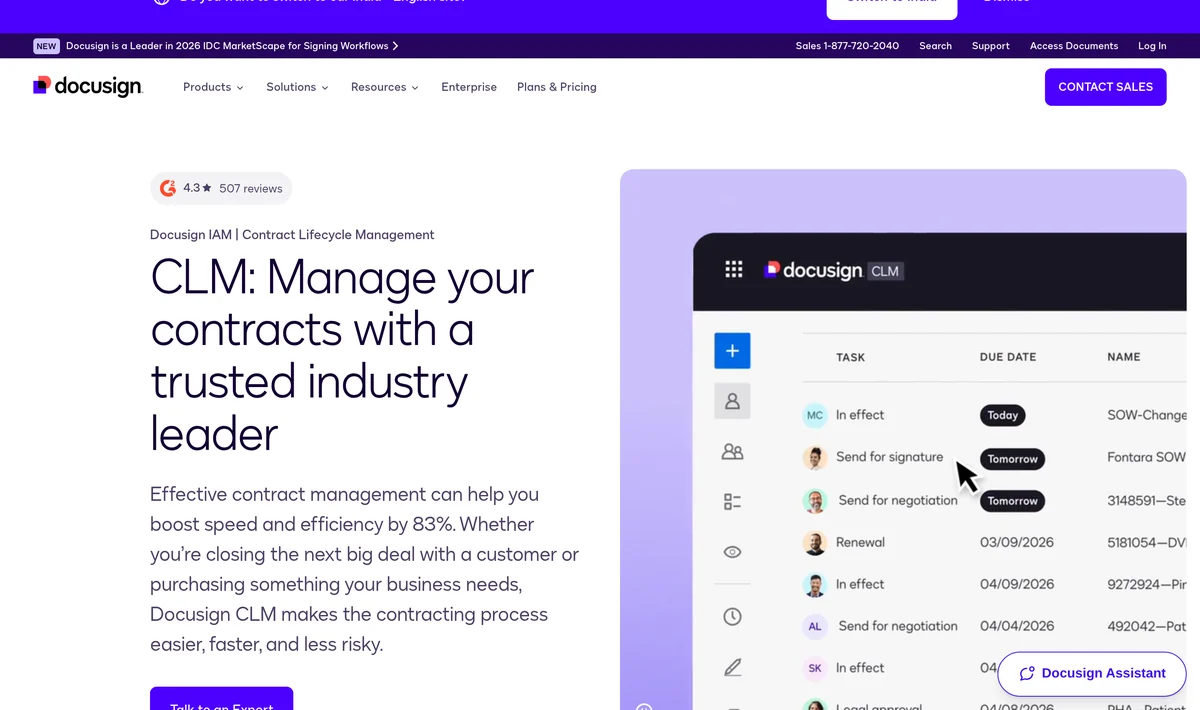
Docusign says on its CLM page that Gartner named it a Leader in CLM for the sixth year in a row and that 2,200 enterprises use it. It offers 100+ pre-configured workflow steps.
The same page covers obligations and renewals through agreement reports, over 100 pre-trained AI models for extraction, and interoperability with Salesforce and SAP Ariba. It also lists a Coupa integration that creates or updates contracts in either system. Signature is native, which shortens the step from approval to signed copy.
Strengths
- Native e-signature
- SAP Ariba and Coupa connections
- Large library of workflow steps
Watch-outs
- No procurement-specific page on the pages we read
- No public price
6. SAP Ariba Contracts
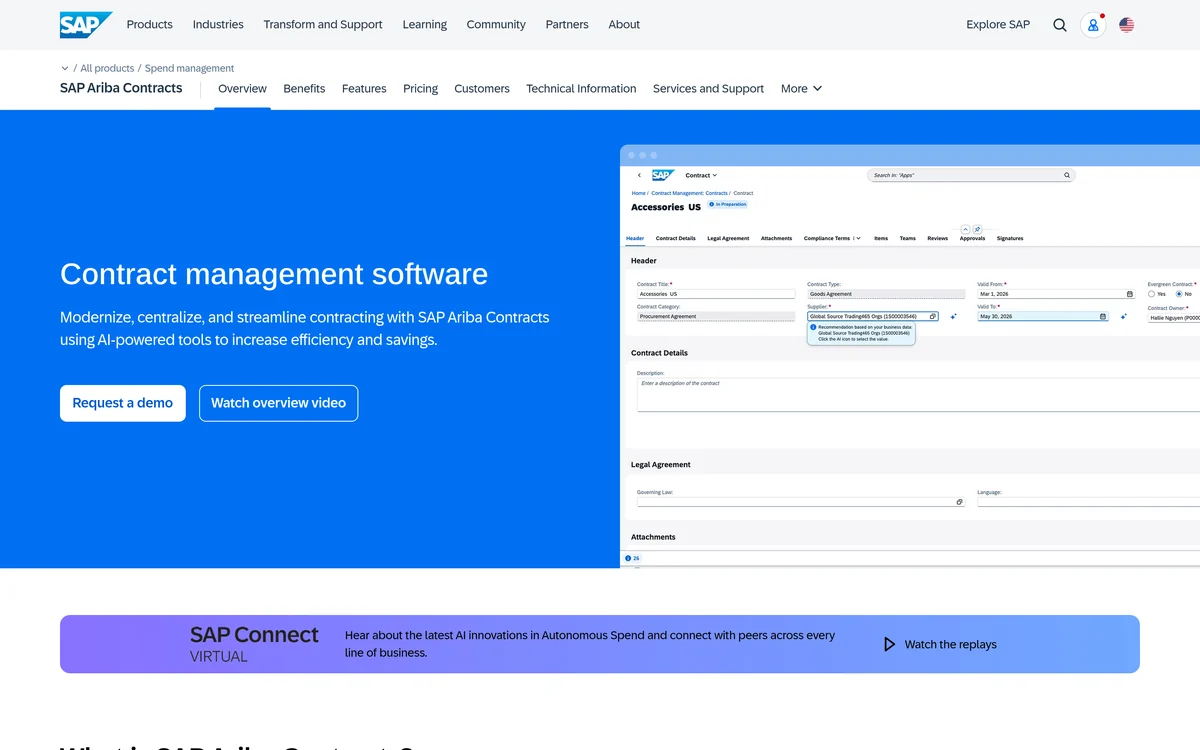
SAP’s product page offers authoring, clause assembly and redlining through embedded SAP Ariba Contract Intelligence by Icertis, plus a Joule Contracts Agent.
Analytics and notifications cover contract metadata such as expiration dates and notification periods. It is priced per user per month, with contract terms of 3 to 36 months. Teams outside SAP Ariba gain little from it.
Strengths
- Native to SAP Ariba sourcing and buying
- Notifications on expiration and notice periods
- Icertis intelligence embedded
Watch-outs
- Obligation tracking not named on the page we read
- Value depends on running SAP Ariba
7. Conga CLM
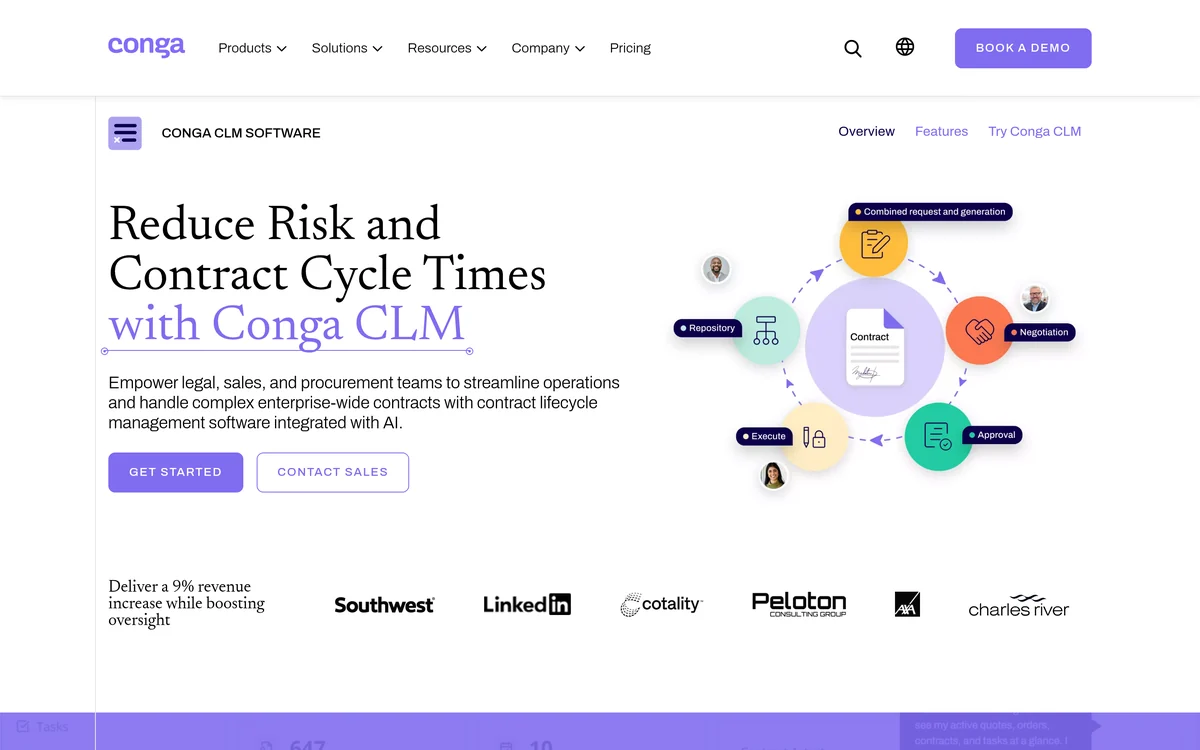
Conga’s CLM page lets teams author and review in MS Word or Google Docs and compare language to a negotiation playbook to spot high-risk clauses.
Its procurement page covers supplier obligations, SLAs, terminations and compliance, and says teams can stay ahead of renewals with alerts. Signature runs through Conga Sign.
Strengths
- Authoring in Word or Google Docs
- Renewal alerts for supplier contracts
- Playbook checks on risky clauses
Watch-outs
- SAP Ariba connector shipped October 2026; confirm it in your own Ariba workspace
- No public price
8. LinkSquares
LinkSquares’ home page has a procurement section that brings vendor history, commercial terms, obligations and notice windows into view before a renewal. It lists Renewals & Obligations as a capability.
Its pricing page says price depends on contract volume, users, modules, implementation and custom integrations. We did not find a named S2P connector.
Strengths
- Renewal view built around notice windows
- Obligations and spend commitments in one place
- Clear list of pricing factors
Watch-outs
- No named S2P connector on the pages we read
- No public price
9. Concord
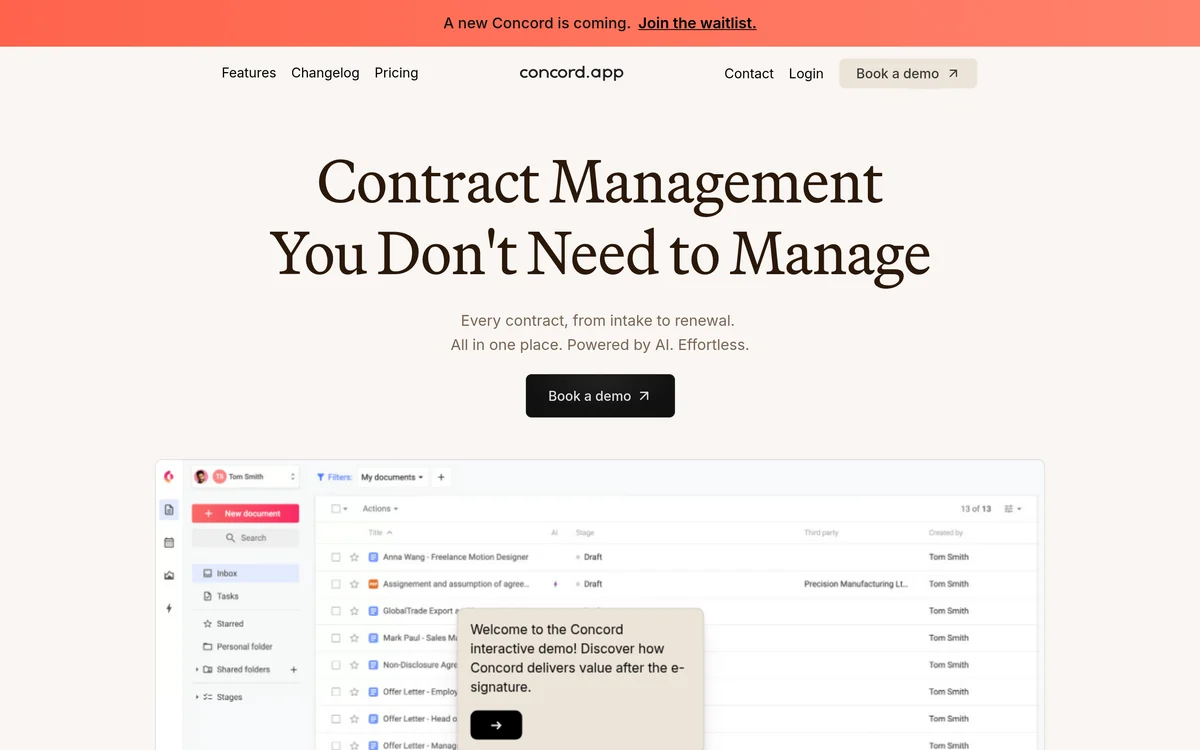
Concord’s pricing page lists Essentials at $499 a month, Business at $899 and Enterprise at $1,299, each paid annually with 5 users. Plans include AI extraction, deadline and renewal reminders and unlimited e-signatures.
Concord says it is trusted by 1,500+ companies. Its home page also announces that a new Concord is coming, so confirm which version you are buying.
Strengths
- Public prices
- Renewal reminders and e-signature included
- Fast self-serve start
Watch-outs
- No named S2P connector
- Product change announced on the home page
10. Juro
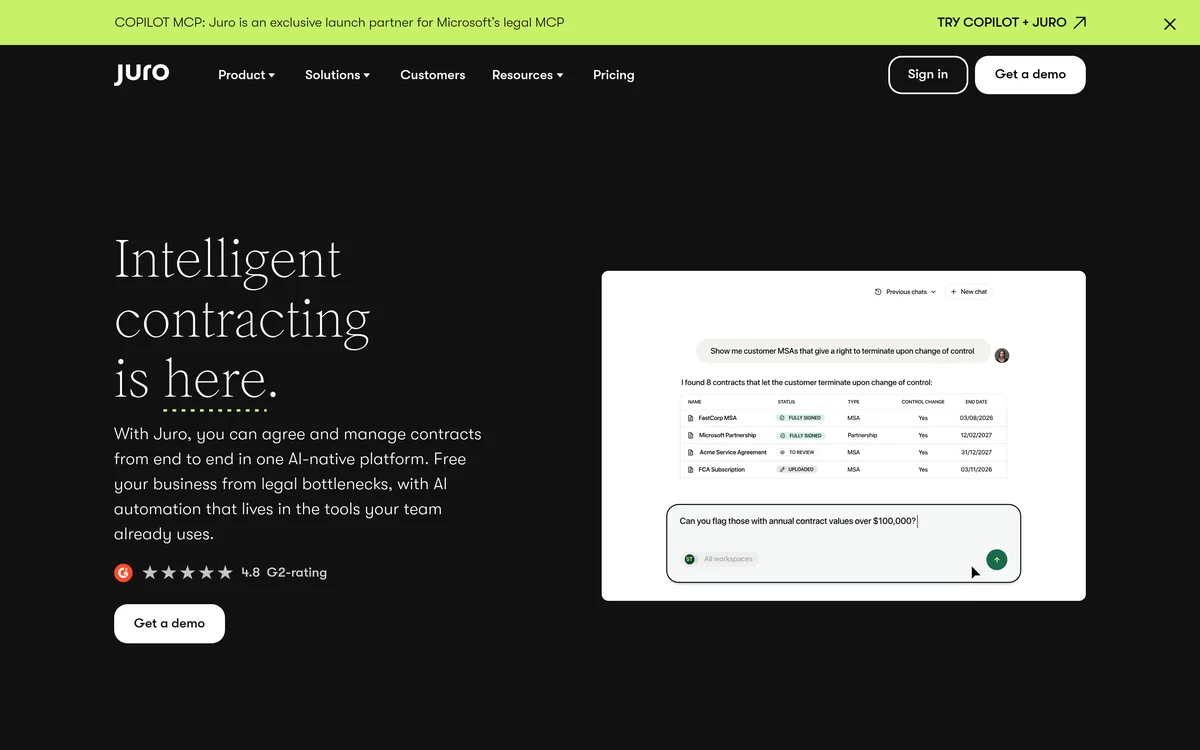
Juro says on its home page that it powers 3 million contracts and holds a 4.8 G2 rating. Its pricing page says every plan includes unlimited users, workflows and templates.
The procurement page keeps first- and third-party paper together and promises you will not miss renewals or obligations. Its repository extracts data from signed contracts.
Strengths
- Unlimited users, workflows and templates
- Native signing
- Handles first- and third-party paper
Watch-outs
- No named S2P connector on the pages we read
- Lighter on supplier performance tracking
11. SpotDraft
SpotDraft’s procurement page starts drafting, approvals and e-signature directly from Coupa, fills contracts with supplier data and syncs signed contracts back. It also automates expiry alerts and renewal reports.
Its repository extracts over 1,000 metadata types. The pricing page bases price on contract volume and includes implementation and migration at no extra fee.
Strengths
- Native Coupa workflow
- Implementation and migration included
- Expiry alerts and renewal reports
Watch-outs
- Obligation tracking not named on the pages we read
- No public price
12. ContractWorks
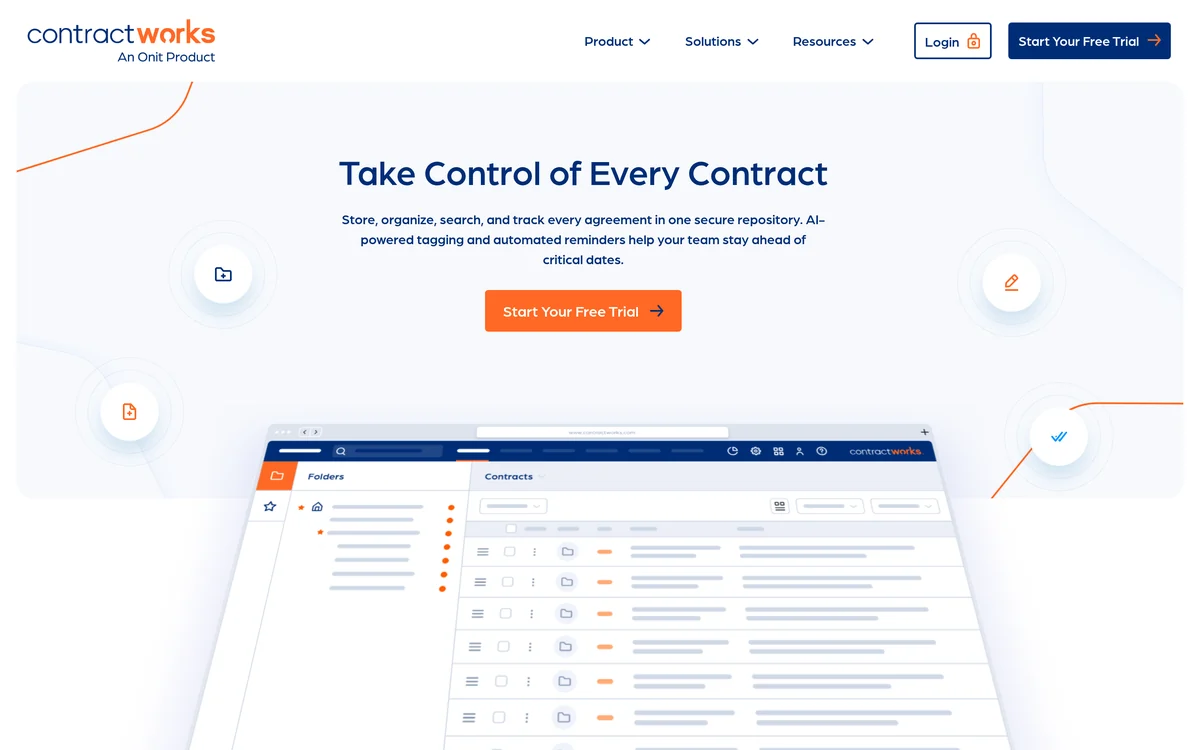
ContractWorks’ home page says its AI identifies parties, effective dates, renewal terms and notice windows. The repository is SOC 2 Type 2 compliant.
Its pricing page lists a $425 a month plan billed annually, with up to 50,000 documents, unlimited users and 10 eSignature licenses. Automated renewals and obligations, drafting and workflows sit in the custom-priced Premium plan.
Strengths
- Public price
- Unlimited users
- 14-day free trial
Watch-outs
- Obligations and workflows need the Premium plan
- Light authoring on the base plan
After signature: the checklist
Run this list on one live supplier contract during every demo. If the tool cannot show each item, the gap becomes your team’s manual work.
- Renewals: the notice date is extracted, a person confirms it, and the alert goes to a named owner well before it becomes a problem.
- Obligations: each obligation has an owner, a due date and a link to the clause that created it.
- Amendments: an amendment updates the record, and the original terms stay visible.
- Supplier link: the contract ties to the supplier record in your ERP or S2P suite.
- Audit trail: every change, approval and signature is logged with a time and a user.
- Exit: you can export contracts and metadata in a usable format if you leave.
Red flags in a demo
- The demo uses only the vendor’s own clean sample contracts, never your scanned supplier paper.
- Renewal alerts go to a shared inbox, not to a named owner.
- AI extraction accuracy is quoted without saying how it was measured.
- The S2P “integration” turns out to be a file export.
- Obligation tracking needs a services project the quote does not include.
- Nobody can say in writing who owns migration of your old contracts.
When your S2P suite’s contract module is enough
Your suite’s contract module is enough when most contracts are supplier agreements created from sourcing events, and you mainly need storage, expiry notices and a link to the PO. A separate CLM earns its cost once legal reviews a lot of third-party paper, obligations need owners, or sales and HR contracts need the same system of record.
If you are still choosing the suite itself, compare source-to-pay suites, read Coupa vs SAP Ariba, or see how source-to-pay differs from procure-to-pay.
Which contract management software should you choose?
To choose contract management software, start with the failure you keep seeing after signature, then check the S2P link. Icertis leads overall, Sirion leads on supplier performance, Ironclad on vendor paper review, and Concord or ContractWorks suit teams that need a published price.
The verdict
- Choose Icertis if you manage a large supplier portfolio and run SAP Ariba.
- Choose Sirion if supplier obligations and service levels drive the value of your contracts.
- Choose Ironclad if procurement reviews a lot of vendor paper and uses Coupa.
- Choose Agiloft if you need custom workflows and many system connections.
- Choose Docusign CLM if your company already signs everything in Docusign.
- Choose SAP Ariba Contracts if you want contracts inside the suite you already run.
- Choose Conga CLM if your negotiators live in Word.
- Choose SpotDraft if contracts should start from Coupa requests.
- Choose Concord, Juro, LinkSquares or ContractWorks if you want a lighter platform with a faster start.
For the wider stack, see the best procurement software, our AI procurement software ranking, or the procurement software guide.
Frequently asked questions
What is contract management software?
Contract management software stores contracts in one system of record and tracks what happens after signature: renewal dates, notice windows, obligations, amendments and the audit trail. Most platforms also handle drafting, review, approval and e-signature, which together make up contract lifecycle management.
What is the difference between contract management and CLM?
Contract management often means storing contracts and tracking dates and obligations. Contract lifecycle management (CLM) covers the full cycle, from request and drafting through negotiation, signature, obligations and renewal. Most platforms in this list are full CLM tools, while ContractWorks starts as a repository.
How much does contract management software cost?
Concord starts at $499 a month paid annually for 5 users, and ContractWorks starts at $425 a month billed annually with unlimited users. SAP Ariba Contracts is priced per user per month on request. Icertis, Sirion, Ironclad, Agiloft, Docusign CLM, Conga, LinkSquares, Juro and SpotDraft are quote based. Our Ironclad pricing and Icertis pricing guides explain what drives those quotes.
Which contract management software works with SAP Ariba?
Icertis, Sirion and Docusign CLM name SAP Ariba connections on their own pages, and SAP Ariba Contracts runs inside the suite with Icertis intelligence embedded. Agiloft lists SAP among its connectors. Confirm which fields sync each way before you buy.
Which contract management software works with Coupa?
Ironclad lists a Coupa integration on its pricing page, and SpotDraft lets teams start drafting, approvals and e-signature directly from Coupa and sync signed contracts back. Docusign CLM says it can create or update contracts in Coupa. Ask each vendor to show the sync live.
Can contract management software stop missed auto-renewals?
Yes, if the notice window is extracted correctly and the alert reaches a named owner in time. Most platforms here send renewal or deadline alerts, but the alert is only as good as the date behind it. Have a person confirm notice dates on high-value contracts.