A supplier’s insurance certificate expires in March. Nobody notices until a site incident in June. The certificate sat in an email folder, the vendor master in the ERP said “active”, and no one owned the expiry date. That gap is what supplier management software is meant to close.
This guide compares eight tools on what their own pages say, read on November 2, 2026. For a scored shortlist across more platforms, see our best supplier management software ranking. For narrower shortlists, see our SRM software and vendor management software rankings. We checked SAP Ariba, Coupa, Ivalua, HICX, Kodiak Hub, Gatekeeper, SupplierGateway and EcoVadis. More guides sit in the supplier management hub, and our research rules are public.
What is supplier management software?
Supplier management software is the system of record for every supplier you pay. It collects supplier data at onboarding, checks it, and keeps it current. It tracks certificates, risk signals and performance over time. Most tools also give suppliers a portal so they update their own records, instead of procurement chasing them by email.
Some vendors split the work in two. Unit4 calls supplier management the operational side: onboarding, data, compliance and performance tracking. It calls supplier relationship management (SRM) the strategic side: long-term partnerships with key suppliers. Most buyers need the operational side first.
The supplier lifecycle these tools cover
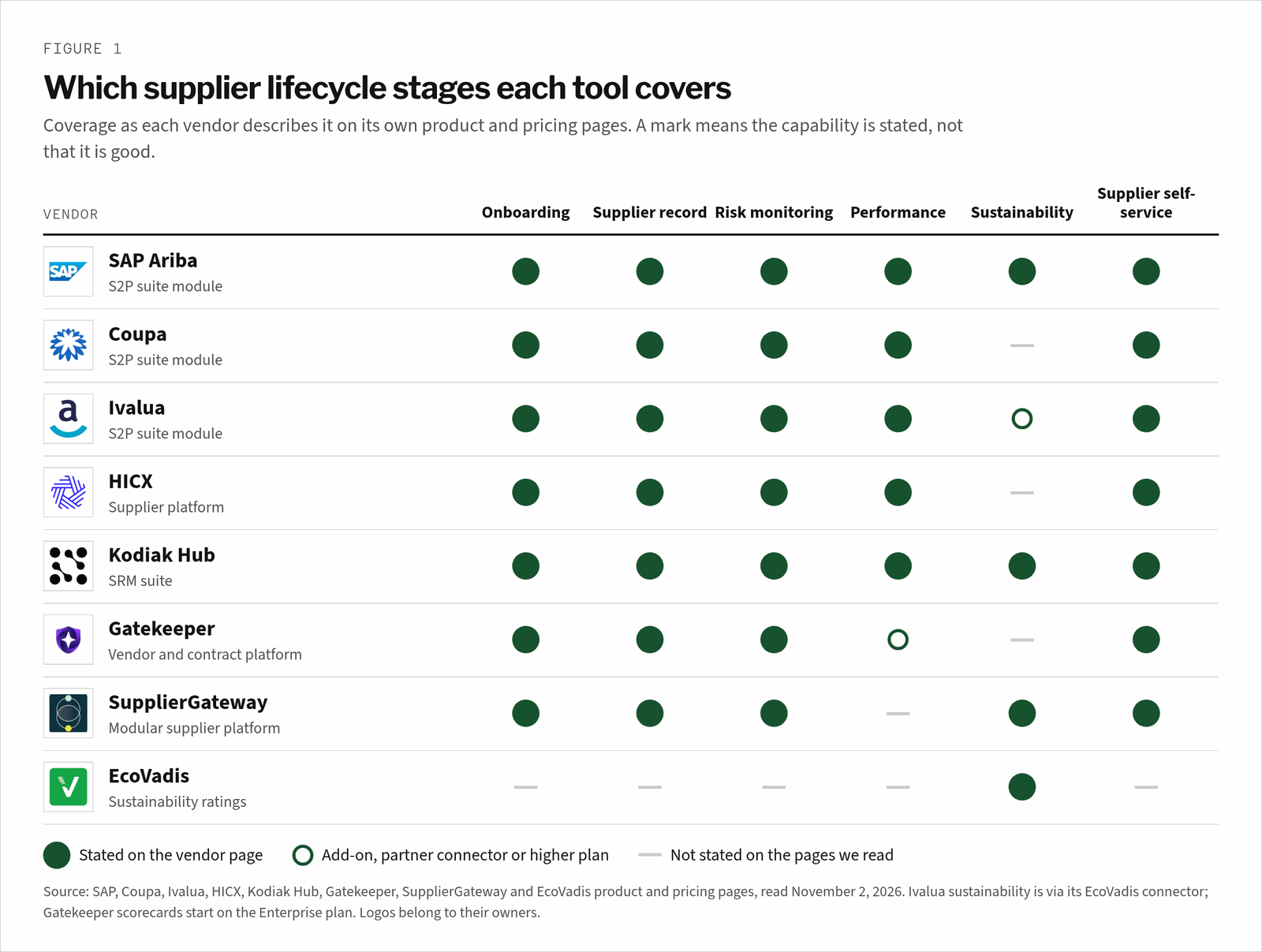
Every tool in this guide maps to the same six stages. The difference is how many stages each one covers, and how deep. Mark the stages you need before the first demo, and ask each vendor to show those stages with your own supplier data.
- Onboarding: collect the supplier’s legal, tax, bank and contact data, then route it for approval.
- Supplier record: keep one clean record per supplier, with no duplicates, synced to the ERP.
- Risk monitoring: watch for sanctions, financial, cyber and compliance changes after approval.
- Performance: score delivery, quality and service through scorecards or surveys.
- Sustainability: collect ESG data or third-party ratings for reporting and due diligence.
- Supplier self-service: a portal where suppliers update their own data and documents.
Three shapes of supplier management software
Supplier management software comes in three shapes. Source-to-pay suites include it as one module. Standalone platforms do only supplier work and connect to your ERP. Specialists, such as sustainability raters, cover one stage well. Your current systems decide the fit.
Suite modules: SAP Ariba, Coupa and Ivalua
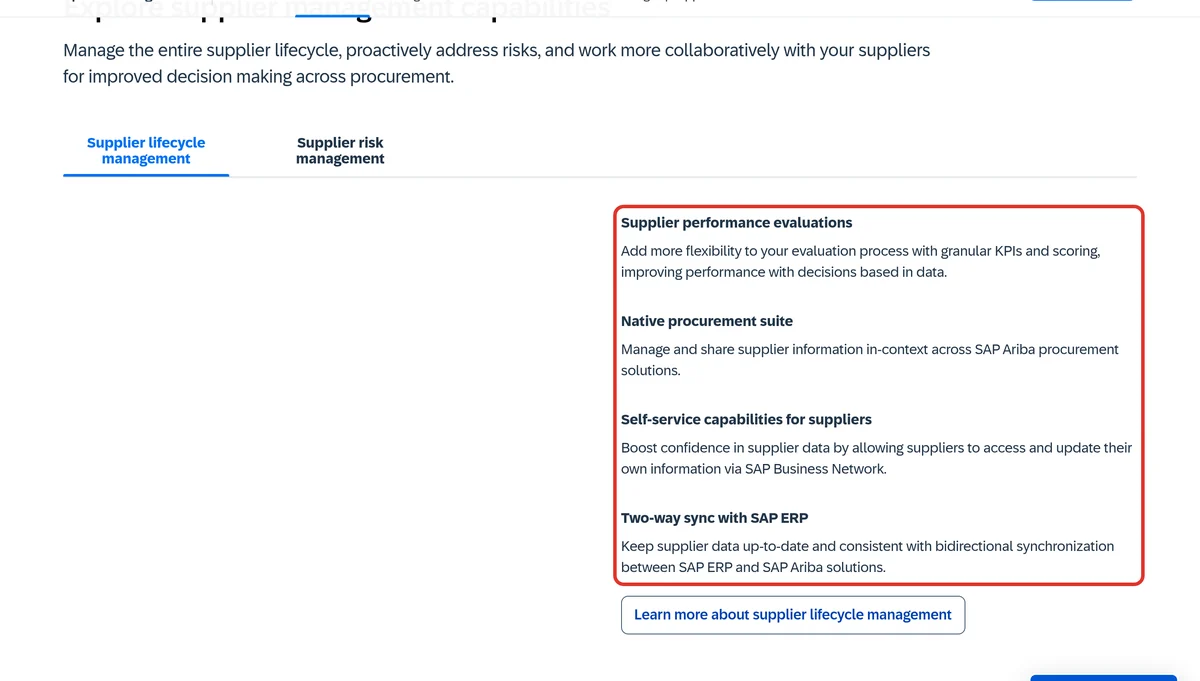
SAP Ariba sells two solutions: Supplier Lifecycle and Performance, and Supplier Risk. Suppliers update their own data through SAP Business Network. Data syncs both ways with SAP ERP. Performance evaluations use granular KPIs and scoring.
Coupa leans on its Supplier Portal. Invoices with missing supplier information get a warning or are blocked until the supplier completes it. Coupa flags risky or duplicate suppliers from the supplier master before a request goes in. It also automates third-party risk checks across InfoSec, anti-bribery and GDPR.
Ivalua covers supplier information management, risk at supplier, sub-tier and contract level, scorecards and a branded supplier portal. Like the other suites, it shares one data model with sourcing, contracts and procure-to-pay. Compare the suites in our source-to-pay suites ranking.
Standalone supplier platforms: HICX, Kodiak Hub, Gatekeeper and SupplierGateway
HICX is built around supplier data quality. Onboarding questions adapt by supplier type, category and country. Duplicates are caught before a record is created. Certificates are tracked to expiry, and the supplier portal runs in more than 100 languages.
Kodiak Hub calls itself an SRM suite. It covers onboarding and intake, risk and compliance checks, and supplier performance scorecards. It names ESG rules it helps report on, including CSDDD, CSRD, LkSG, EUDR and the Modern Slavery Act. It says it manages more than 300,000 suppliers across 176 countries.
Gatekeeper combines vendor and contract management. Every plan includes unlimited users, a vendor portal and a risk register. Balanced scorecards for vendor performance start on the Enterprise plan. SupplierGateway sells onboarding and add-on modules separately, each with a public starting price.
Specialists: sustainability ratings
EcoVadis does not manage your supplier record. It rates supplier sustainability, and you invite suppliers to be rated. Ivalua lists a standard EcoVadis connector. Supply chain risk monitoring is a related specialist category with its own buyers.
What the record holds
A supplier record is only useful if every field has an owner and a source. Write this table down before you shortlist tools. Then ask each vendor where each field comes from, and who updates it. Fields without an owner go stale first.
| Field | Who owns it | Source system |
|---|---|---|
| Legal name, address, tax ID | Supplier, checked by procurement | Onboarding form, validated against external sources |
| Bank details | Supplier, approved by finance | Onboarding form, then the ERP vendor master |
| Certificates and insurance, with expiry dates | Supplier, reviewed by the category owner | Supplier portal uploads |
| Sanctions and financial risk | Procurement or compliance | Monitoring feed or add-on module |
| Performance scores | Business owner of the relationship | Scorecards or surveys |
| Sustainability rating | Sustainability or procurement team | Ratings provider such as EcoVadis |
| Contracts and renewal dates | Contract owner | CLM or contract repository |
Onboarding: where bad supplier data starts
Onboarding is where most bad supplier data enters. A good tool asks each supplier only the questions that apply, checks high-risk fields, and blocks duplicates. A weak one is a long web form that copies whatever the supplier types into the ERP.
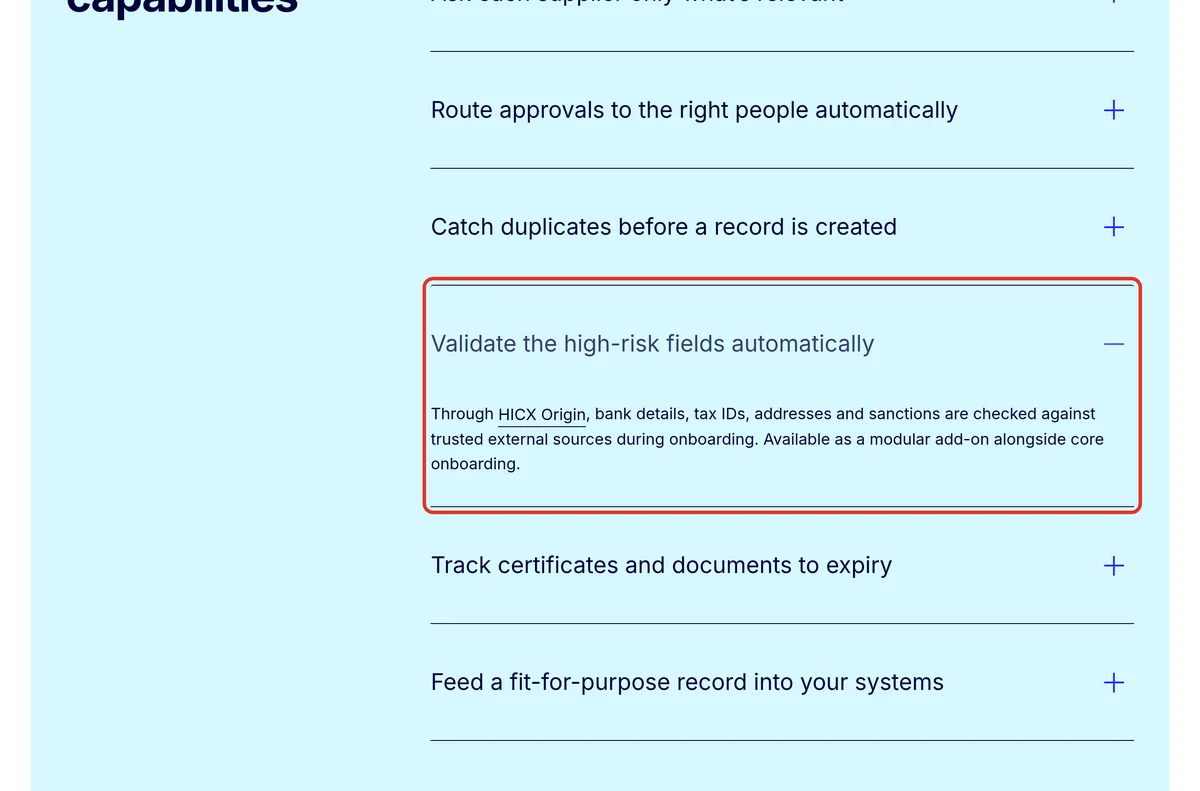
Check how bank and tax data is validated, in writing. HICX validates bank details, tax IDs, addresses and sanctions through HICX Origin, sold as an add-on. Coupa blocks incomplete invoices until supplier data is fixed. Ask every vendor which checks are included and which cost extra.
If the problem starts earlier, at the purchase request, read our intake-to-procure guide. Intake tools often trigger supplier onboarding when a request names a new vendor.
Risk monitoring after approval
A supplier that passed onboarding can fail a sanctions check six months later. Risk monitoring rechecks approved suppliers on a schedule or a live feed. The questions to ask are which data sources it uses, how often it rechecks, and who gets the alert.
SupplierGateway prices sanctions monitoring as its own module, from $2,500 a year, rechecked every 24 hours. Its Access and Monitoring module, with Experian financial and legal data, starts at $2,700 a year. Gatekeeper includes MarketIQ Lite credit ratings and limits on every plan. Kodiak Hub lists sanctions, climate, financial and media monitoring.
Sustainability ratings: who pays
With EcoVadis, both sides can pay. Buyers subscribe to Rate My Suppliers, which EcoVadis prices by company size, with unlimited suppliers and users, on quote. Suppliers pay separately for their own rating through Rate My Company. Those supplier fees are public on the EcoVadis pricing page.
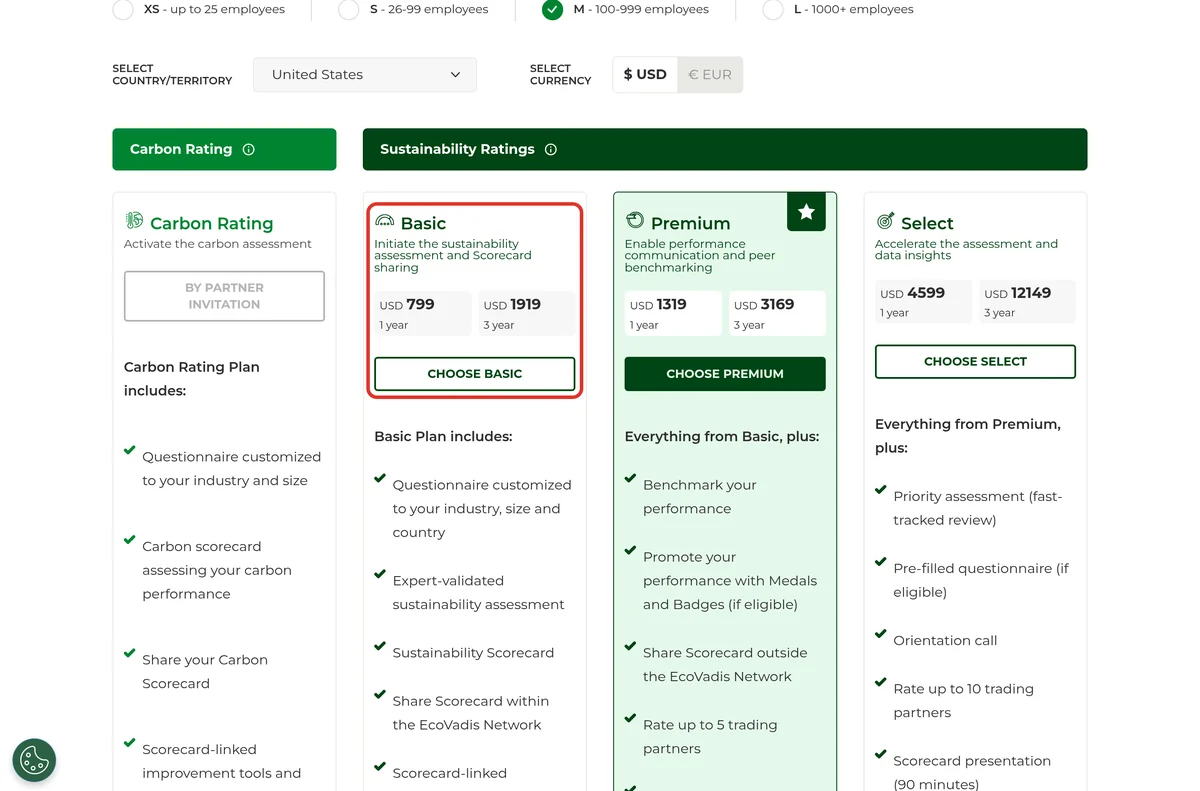
| Rate My Company plan | 1 year | 3 years | Adds |
|---|---|---|---|
| Basic | $799 | $1,919 | Assessment and scorecard sharing in the EcoVadis network |
| Premium | $1,319 | $3,169 | Benchmarking, medals and badges, rate up to 5 trading partners |
| Select | $4,599 | $12,149 | Priority assessment, orientation call, rate up to 10 trading partners |
| Corporate | From $7,649 | From $18,359 | Larger programmes |
Tell suppliers about this cost before you require a rating. A small supplier asked for a paid rating by every customer will push back. Put the requirement, and who pays, in writing in the supplier code or contract.
How much does supplier management software cost?
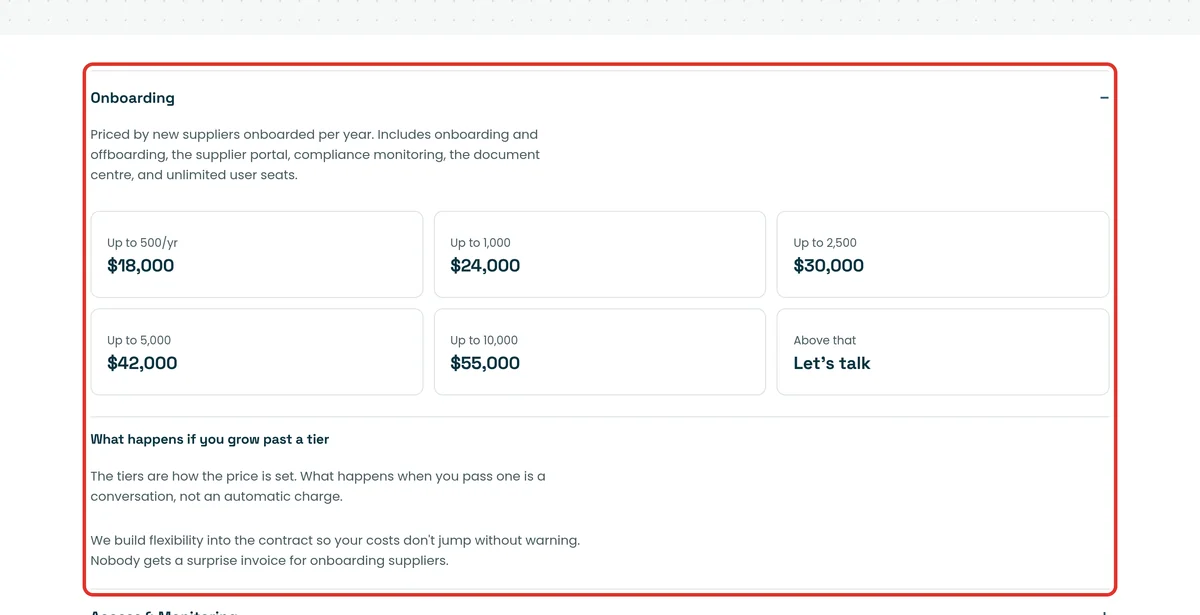
Most supplier management software is quoted, not listed. SAP Ariba, Coupa, Ivalua, HICX and Kodiak Hub show no prices on their supplier pages. SupplierGateway publishes prices: onboarding starts at $18,000 a year for up to 500 new suppliers. Gatekeeper sizes plans by third-party count but shows no prices.
| Tool | Public price signal | What drives the price |
|---|---|---|
| SupplierGateway Onboarding | $18,000 to $55,000 a year | New suppliers onboarded per year, 500 to 10,000; quoted above that |
| SupplierGateway add-ons | From $2,500 to $31,500 a year | Sanctions, monitoring, ESG and sustainability modules |
| Gatekeeper | Quoted | Third parties: up to 250, up to 750, or 750+ |
| EcoVadis Rate My Suppliers | Quoted | Buyer company size; unlimited suppliers and users |
| SAP Ariba, Coupa, Ivalua, HICX, Kodiak Hub | Quoted | Not stated on the pages we read |
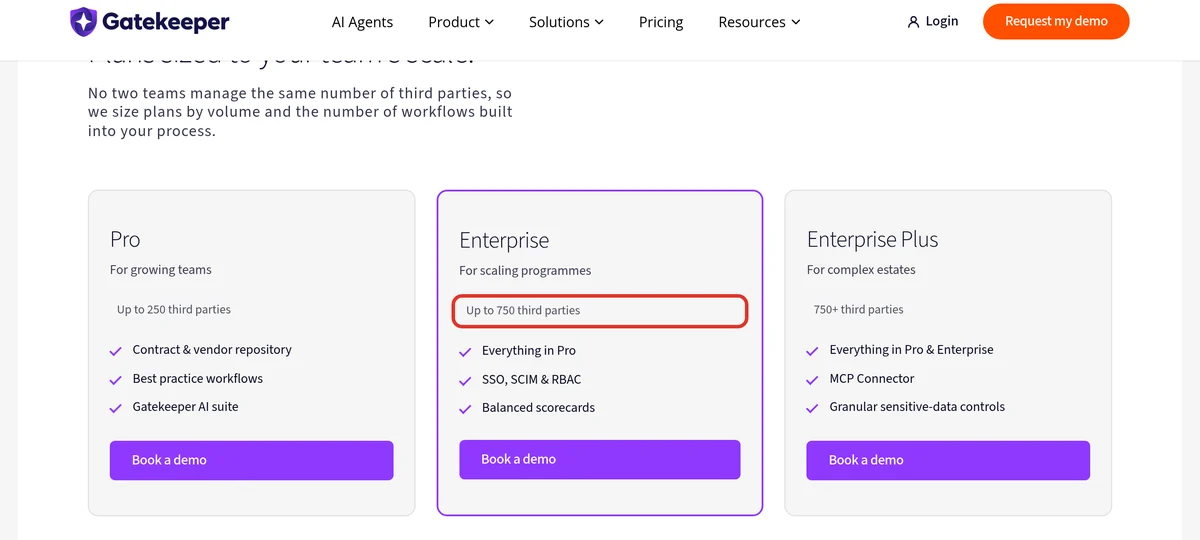
Count your suppliers two ways before any pricing call: active suppliers, and new suppliers each year. SupplierGateway prices on the second number, Gatekeeper on the first. Suite modules are usually priced with the rest of the suite. See our Coupa pricing guide for how one suite quotes.
When your ERP vendor master is enough
Your ERP vendor master is enough when you have a few hundred suppliers, one ERP, and no regulated supply chain. It stores names, bank details and payment terms. It does not chase expired certificates, monitor sanctions or score performance. Once those jobs live in spreadsheets, you need a dedicated tool.
If you already run a suite, check its supplier module first. Our Coupa vs SAP Ariba comparison covers both suites in depth. For the wider market, start with the procurement software guide.
How to choose supplier management software
Start from your systems, then your suppliers. Teams on a suite should test its supplier module before buying anything else. Teams on several ERPs need strong data sync and duplicate checks. Teams in regulated or direct-materials supply chains need risk and ESG coverage.
- One suite, simple supply base: the suite’s own module, such as SAP Ariba or Coupa.
- Several ERPs, messy data: a data-first platform such as HICX.
- Direct materials and ESG rules: an SRM suite such as Kodiak Hub, or Ivalua with EcoVadis.
- Mid-sized team, vendors and contracts together: Gatekeeper.
- Need a public price and modular buying: SupplierGateway.
Need a wider shortlist? Our best procurement software ranking and SAP Ariba alternatives cover the suites in more detail.
After go-live: the supplier record checklist
- Owners: every field in the record has a named owner, in writing.
- Expiry alerts: certificates and insurance send alerts 60 days before they expire.
- ERP sync: someone checks weekly that new and changed suppliers reach the ERP.
- Duplicates: a monthly report lists possible duplicate suppliers for review.
- Risk alerts: each alert type routes to one person, with a response time.
- Offboarding: inactive suppliers are blocked for payment before they become a problem.
Red flags in a demo
- The demo shows a clean supplier record, but not how it was validated.
- Bank and tax validation is “available”, with no price in writing.
- The rep cannot say how often sanctions are rechecked.
- ERP sync is one way, with no plan for changes made in the ERP.
- The price depends on supplier count, but nobody asks for yours.
- Suppliers must pay for a rating, and the vendor does not mention it.
Frequently asked questions
What does supplier management software do?
Supplier management software keeps one record for each supplier. It collects and checks supplier data at onboarding, syncs it with the ERP, tracks certificates and risk signals, and scores performance. Most tools include a supplier portal, so suppliers update their own details and documents instead of procurement chasing them by email.
What is the difference between supplier management and SRM?
Supplier management is the operational side: onboarding, supplier data, compliance and performance tracking. Supplier relationship management (SRM) is the strategic side: building long-term partnerships with key suppliers. Unit4 draws the line this way. Many tools, such as Kodiak Hub, sell both under the SRM label.
How much does supplier management software cost?
Most vendors quote prices. SupplierGateway is an exception: its onboarding module costs $18,000 to $55,000 a year, based on 500 to 10,000 new suppliers onboarded. Add-ons such as sanctions monitoring start at $2,500 a year. Gatekeeper sizes plans by third-party count, with prices on request.
Do suppliers pay for EcoVadis ratings?
Often, yes. Buyers subscribe to EcoVadis Rate My Suppliers on a quote. Suppliers then pay for their own rating through Rate My Company. For a US company with 100 to 999 employees, the Basic plan costs $799 for one year and Premium costs $1,319, per the EcoVadis pricing page.
Is the ERP vendor master enough for supplier management?
For a small supply base on one ERP, it can be. The vendor master stores names, bank details and payment terms. It does not track certificate expiry, monitor sanctions, score performance or give suppliers a portal. Once those tasks live in spreadsheets, a dedicated supplier management tool is usually worth it.
Does SAP Ariba include supplier management?
Yes. SAP sells two solutions: SAP Ariba Supplier Lifecycle and Performance, and SAP Ariba Supplier Risk. They cover onboarding, qualification, segmentation, performance evaluations and risk monitoring. Suppliers update their own data through SAP Business Network, and data syncs both ways with SAP ERP.